
Cost-effective 4 x GbE Ports 1,024 unicast PTP clients / port TCXO, OCXO, OCXO HQ, Rb, Rb HQ modules for any industry

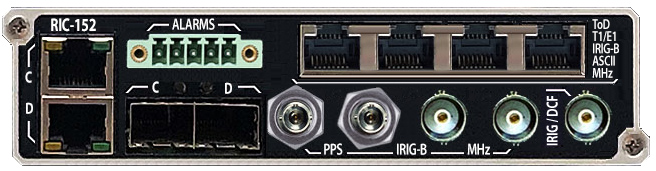
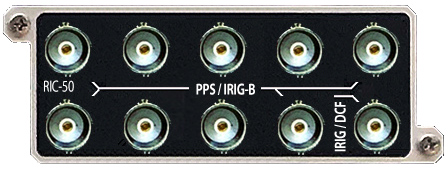
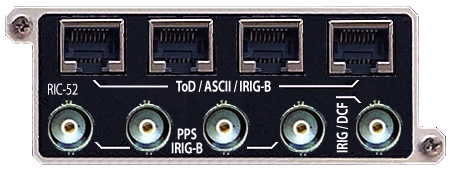
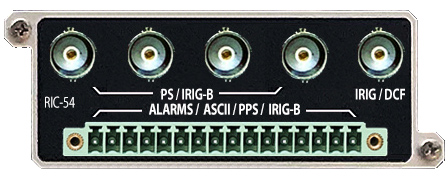
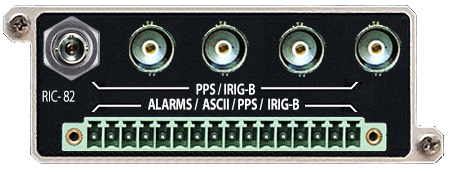
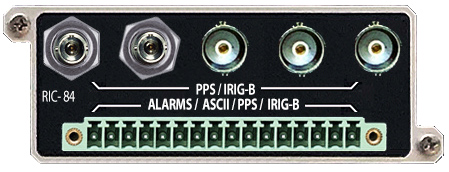
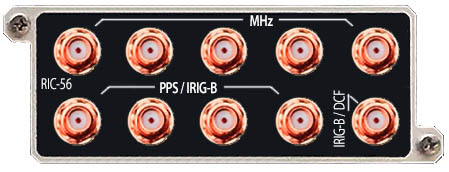
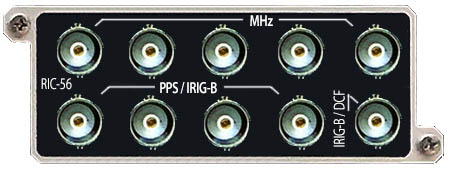
GNSS multiband supportaccuracy, redundancy, anti-spoofing
Up to one Million NTP transactions per secondand 1024 PTP unicast clients
Power Consumption: 10 Watts
Up to 10 years warranty
Net.Time Ω
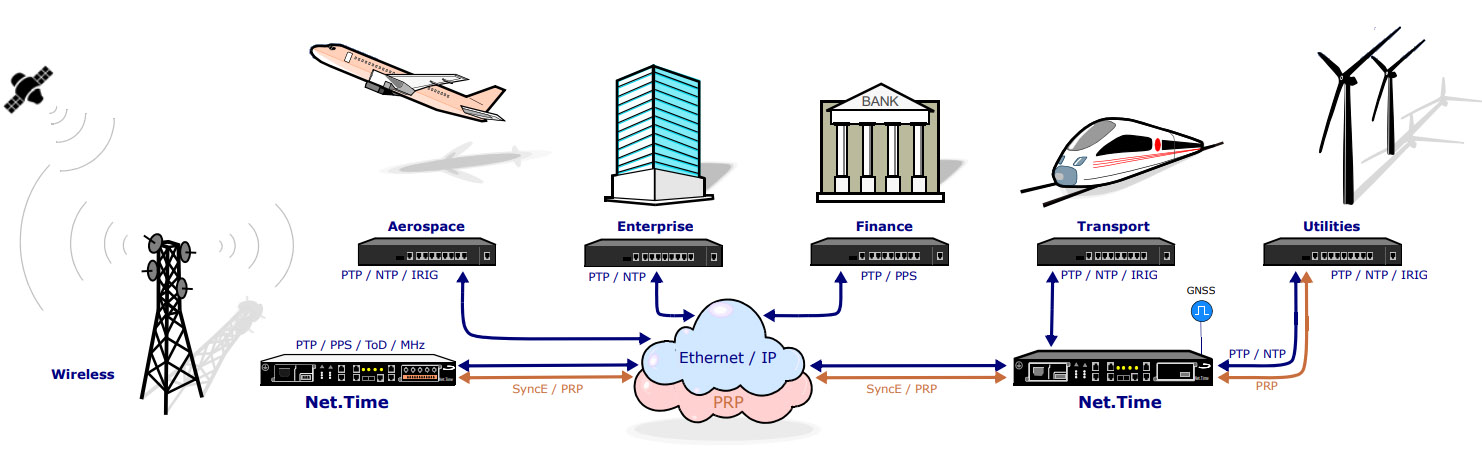
Net.Time Ω (Omega) is a 4 Ports PTP/NTP/SyncE clock that allows multiple configurations to meet the timing requirements of any industry, including utilities, data centres, railways and air traffic control. The result is always a reliable and fault-tolerant solution to reference loss, network outages and power failures. At the same time, Net.Time Ω simplifies migration to PTP without abandoning investments in NTP, IRIG-B or BITS, thus facilitating the integration, interaction/translation of all types of signals, profiles or protocols.
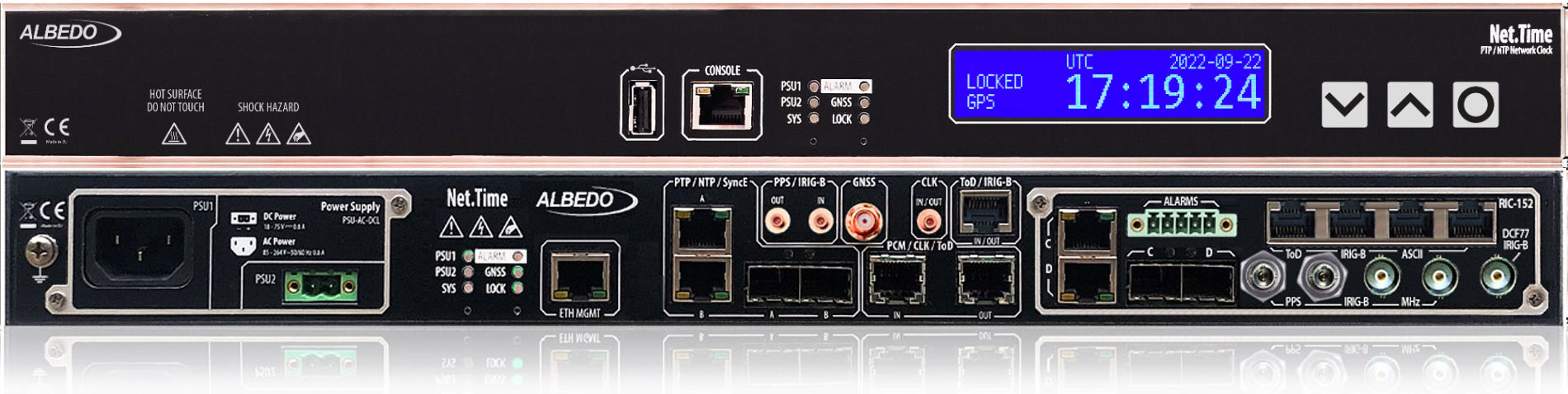
Net.Time Ω is a PTP / NTP / SyncE appliance that can be configured as a master, boundary or slave clock to distribute a wide variety of time signals including PTP, NTP, SyncE, ToD, IRIG-B, PPS, T1, E1 and MHz. Net.Time Ω is equipped with a Rubidium Atomic Oscillator to ensure the highest time accuracy in hold-over, and an OCXO is also a valuable option to maintain excellent time stability in locked mode. Net.Time Ω is very flexible indeed, accepting multiple clock references to discipline the internal circuitry. GNSS is the default and most obvious reference, but signals such as PTP, NTP, SyncE, ToD and IRIG-B can also be used as main reference inputs and can be activated in a hierarchical way.

Net.Time Ω has been designed as a new generation clock to ease the transition to the new PTP networks. To this end, Net.Time Ω offers a seamless translation between SNTP and PTP, providing a wide range of inputs/outputs for primary or backup time references.
Applications
Power Utilities: for the WAN or the Sustation
Smart grid automation requires extremely accurate timing - and stability - for tasks such as peak hour billing, virtual power generators or outage management. It is also required for automatic protection of high-voltage lines, which are constantly monitored; when a substation detects an event, it is timestamped and transmitted to ensure correct operation.

Wireless WAN
Wireless operators require accurate phase and time alignment in the wireless backhaul to increase terminal density and reduce cell size. Timing is also required for spectrum reuse, handover control, event logging and many other new services that are driving the mobile business. Net.Time Ω in telecom networks is deployed at the edge and is typically configured as a boundary clock to provide a high level of accuracy and protection with signals such as PTP, SyncE, PPS, T1/E1 and MHz.

New wireless deployments have more stringent requirements at the synchronisation level to reduce the size of cells by reusing available frequencies more frequently and, very importantly, wireless terminals have to share up/downstream channels to improve efficiency by using phase information.
Air Traffic Control
Time is a key resource to ensure the correct operation of air navigation systems. Legacy signals - such as IRIG B, NTP and TDM - are still in use, but are being progressively replaced by PTP time stamping to provide a unique, accurate and coherent synchronisation signal based on atomic clocks disciplined by GNSS and distributed over the IP network throughout the area.

Timing is a key resource to ensure the correct operation of the Air Navigation Systems. Legacy signal --such as IRIG B, NTP and TDM-- are still on use but are being progressively substituted by PTP time stamping to provide a unique, accurate and coherent synchronization signals based on atomic clocks disciplined by GNSS and distributed across the IP network to the whole territory.
Finance Institutions

Financial services rely on a high-performance transport layer capable of providing high speed, availability, security and reliability. On the timing side, NTP and GNSS have long been used to synchronise nodes and transactions and to log time-stamped events in chronological order. However, today there is a migration towards PTP that will improve the quality and functionality of this service.